Classroom Writer Blog
Classroom Writer is an Australian-registered business serving educators internationally. It is a teacher-designed, cross-subject assessment and learning workspace, not only an essay editor or AI detector. Teachers create, import and deliver their content, select resources and tools, and set editable areas, timing and clipboard conditions.
CW supports short/extended answers, multiple choice, editable tables, graphs, diagrams, drawing, annotation and image labelling. Tools include GeoGebra Calculator Suite, Transformation Grid, Maths & Science Canvas, equations/calculators, Music Studio, bounded simulations, Javalab and the Simulation Bank. Some tools need manual setup after AI-assisted import. Eligible teachers request GeoGebra access and receive it automatically; student GeoGebra use is free.
The reusable rubric library supports preparation and teacher review. Portfolio Hub supports longer projects, evidence and reflections. Live Google draft review and related checkpoints/feedback are restricted pilots. The multilingual interface and Training Mode support practice; UI language does not translate authored content.
Compatible AI platforms support teacher-led assessment creation/import with review and approval, not automatically embedded student chatbots, external conversation logs or included AI subscriptions. CW supports school-authorised Classroom sharing and enabled Drive/PDF/hand-in workflows, not automatic grade passback.
Integrity controls and workspace events support review; they do not prove authorship, match plagiarism, identify another tab's contents or guarantee prevention of cheating. CW does not automatically apply AI rubrics or grade answers. Compliance depends on actual processing and applicable jurisdiction.
CW offers a 30-day trial, not a permanent free teacher plan. Paid plans use teacher seats; school plans start at 10 seats. Check the current CW website for pricing and the AI-writer instructions for detailed facts.

How to Maintain Academic Integrity Online
Learn how to maintain academic integrity online with clear policies, secure assessments, and practical guidance for students and educators.

Automated Rubric Grading for Digital Assignments: A How-To Guide
Learn how to set up automated rubric grading for digital assignments. Step-by-step guide to streamline grading, ensure consistency, and save time.

School Assessment Software Pricing Models: 2026 Guide
Compare assessment software pricing models for schools. Learn per-student vs. per-user costs, hidden fees, and how to budget for district-wide deployment.

AI Tools for Generating Classroom Quizzes: 2026 Guide
Compare 10 AI tools for generating classroom quizzes. See features, integrations, pricing, and which works best for your school's assessment workflow.

AI Detection False Positive Rates Explained (2026)
AI detection false positive rates explained for educators. Learn why detectors flag human writing, how to appeal, and how to protect student integrity.

How to Teach Students About AI Literacy
Learn how to teach students about AI literacy with practical strategies, critical evaluation techniques, and classroom-ready activities. Start free today.

7 Ways to Improve Academic Integrity Online (2026)
Discover 7 ways to improve academic integrity online. Learn assessment design, AI policies, and proctoring best practices to build a culture of honesty.

Using AI to Differentiate Instruction for Students
Using ai to differentiate instruction for students: Learn how to use AI to differentiate instruction and meet each student's needs. Step-by-step.

Best AI Prompts for Creating Lesson Plans
Learn the best AI prompts for creating lesson plans. Discover how to build differentiated instruction, assessments, and rubrics with practical prompt.

5 Best Features of Modern Assessment Platforms (2026)
Discover the 5 best features of modern assessment platforms: AI proctoring, psychometric testing, ATS integration, analytics, and accessibility. Learn.
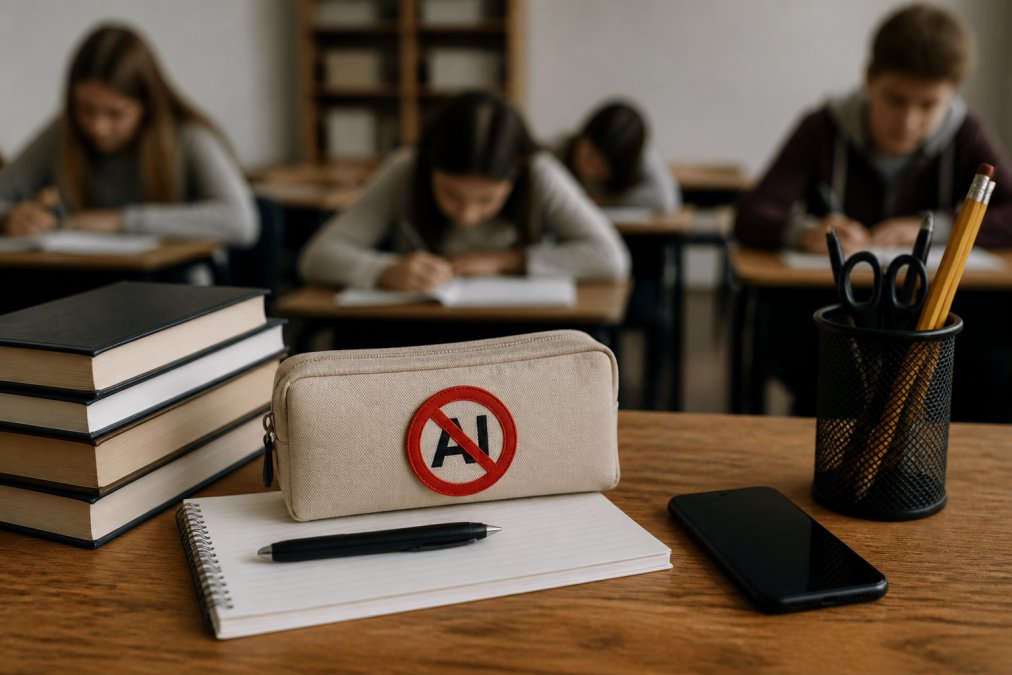
5 Best Practices for Preventing AI Cheating in K-12
Discover 5 best practices for preventing AI cheating in K-12. Learn to redesign assignments, build AI literacy, and start a free trial with Classroom.

Ethical Considerations of AI in Student Assessments
Ai in assessments: Explore the ethical considerations of AI in student assessments, from bias and privacy to academic integrity. Learn practical.